

Can You Get All-on-X Dental Implants in Houston With Severe Bone Loss?

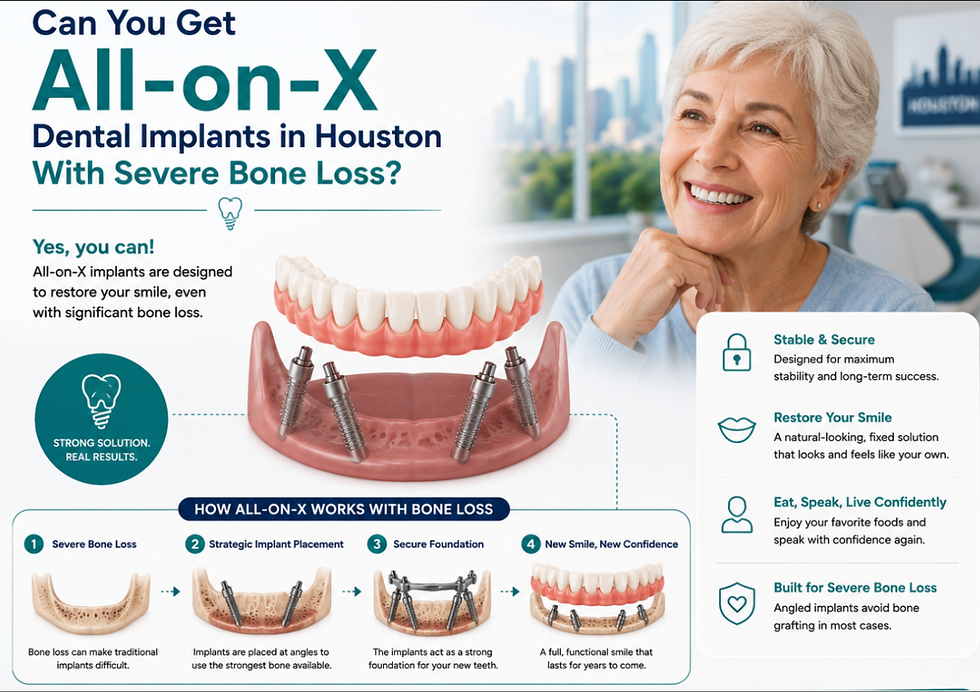
Severe bone loss can limit options for restoring a patient’s smile and oral function. All-on-X dental implants offer a comprehensive restorative option that addresses both function and appearance. This article reviews the feasibility of All-on-X in Houston for patients with significant jawbone loss, outlining treatment choices, risks, expert guidance, and financial considerations so patients know what to expect from the process.
Feasibility
Assessing suitability for All-on-X requires a clinical evaluation of the jawbone and overall oral health. These restorations support a full arch of prosthetic teeth by placing titanium posts to engage available bone. Feasibility depends on jawbone condition and whether preparatory procedures, such as bone grafting, are necessary. A careful assessment by an experienced clinician clarifies the patient’s options and the likelihood of a successful outcome.
Treatment Options
The All-on-X system is planned to meet individual needs and produce predictable results. Compared with traditional implant approaches, it can reduce overall treatment time and often limits the need for extensive bone augmentation. In many cases the method permits immediate function, with a temporary prosthesis provided on the day of surgery to restore appearance and chewing ability while healing proceeds.
Risks
All-on-X implants generally show high success rates, but patients should understand possible risks. These include infection, implant failure, and perioperative or postoperative complications. Discussing these risks with the dental team and following postoperative instructions are essential steps to reduce complications and support healing.
Expert Recommendations
Clinicians recommend a full medical and dental review before proceeding with All-on-X treatment. Individual factors—such as systemic health, medications, and lifestyle—affect healing and implant success. Personalized planning and excellent oral hygiene are critical to long-term outcomes and help preserve patient comfort throughout treatment.
Consultation
The initial consultation includes a detailed evaluation, often using advanced imaging to map bone anatomy and plan implant placement. The dentist will review the proposed treatment plan, discuss anticipated results, and answer patient questions so expectations are clear before surgery.
What Are All-on-X Dental Implants and How Do They Work?
All-on-X dental implants are a full-arch restorative solution for patients with missing or compromised teeth. The approach commonly uses four to six implants placed strategically in the jaw to support a fixed arch of prosthetic teeth. Beyond restoring appearance, these implants help stimulate the jawbone and reduce the bone resorption that follows tooth loss.
Procedure Overview
The process begins with diagnostic imaging and a clinical exam to evaluate bone and oral health. Surgical placement of the implants is usually completed in a single visit, after which the patient receives temporary prosthetics while the implants integrate with the jawbone. Once integration is confirmed, the dentist fits the permanent prosthesis.
Benefits
All-on-X restorations restore chewing and speech, improve facial appearance, and often enhance self-confidence. They also support jawbone health by limiting further resorption. Many patients regain substantial function quickly, and some can return to normal eating habits on a soft diet soon after surgery.
Suitability for Patients with Severe Bone Loss
Patients with severe bone loss may still be candidates for All-on-X. The system is designed to use areas of adequate bone density and to provide support where traditional implants might not be feasible. A thorough assessment of bone volume and anatomy determines the best plan for each patient.
A deeper understanding of bone loss patterns reveals the significant challenges dentists face when rehabilitating the maxilla, especially after tooth loss.
Understanding Perpetual Bone Loss and Maxillary Rehabilitation ChallengesAs described by Misch,6 there is a 25% decrease in width of bone during the first year after tooth loss and an overall decrease in height during this first year following extractions for an immediate denture. Hence, this bone loss is perpetual after tooth loss. The geometry of bone loss is unevenly spread out in the oral environment. In an advanced bone loss scenario, the maxilla can be a challenge to rehabilitate. All on X and the Patient Experience
Availability in Houston
Patients in Houston have access to clinics experienced in complex full-arch restorations. Oral Family Dental, at 8800 Long Point Rd, Suite A, Houston, TX, provides advanced dental services including All-on-X treatment. Prospective patients can arrange a consultation to review their case and available options.
What distinguishes All-on-X implants from other full arch options?
All-on-X differs from removable dentures and some other full-arch methods by anchoring a fixed prosthesis directly to implants in the jaw. This secure attachment reduces movement and the discomfort associated with ill-fitting dentures, giving a more natural feel and function.
How do All-on-X implants support patients with severe bone loss?
The All-on-X concept places implants in areas of the jaw with sufficient bone density and uses the available anatomy to maximise stability. This strategy can reduce the need for extensive grafting and improves the likelihood of successful implant integration for patients with reduced bone volume.
How Does Severe Bone Loss Affect Eligibility for All-on-X Implants in Houston?
Severe bone loss complicates candidacy but does not automatically exclude patients. Dental teams assess jawbone density and anatomy with imaging such as CBCT scans to determine whether All-on-X or adjunctive procedures are needed and to create a tailored treatment plan.
What jawbone density levels are required for successful implant placement?
Successful placement depends on having adequate bone to stabilise the implants. Clinicians use diagnostic imaging to measure bone quantity and quality and apply clinical criteria to decide whether All-on-X is appropriate or if preparatory procedures are required.
Can patients with severe bone loss qualify for All-on-X implants?
Many patients with severe bone loss can qualify for All-on-X through customised planning and, when needed, adjunct procedures. The treatment plan is designed to make the best use of available bone and to achieve a predictable restorative outcome.
What Are Bone Grafting Procedures and Alternatives for Patients With Severe Bone Loss?
Bone grafting transfers bone or bone-like material to deficient areas of the jaw to create a stable base for implants. When performed appropriately, grafting can enable implant placement for patients who otherwise lack sufficient bone support.
How does bone grafting improve implant outcomes in Houston dental care?
In Houston practices, bone grafting improves implant success by restoring a stable foundation for implants and increasing the chance of osseointegration, the biological fusion between implant and bone that ensures long-term stability.
What bone graft alternatives exist for All-on-X implant candidates?
Alternatives to traditional grafts include synthetic bone substitutes and osteoconductive scaffolds. These options can reduce donor-site morbidity and may shorten recovery while providing an adequate matrix for implant integration in many cases.
What Is the Process and Recovery Timeline for All-on-X Implants With Bone Loss Treatment?
Treatment begins with a detailed evaluation and may include preparatory procedures such as bone grafting when required. Recovery usually spans several weeks, during which patients move from temporary to permanent prosthetics as healing and implant integration progress.
Expected Recovery Timeline
Recovery varies by patient but often ranges from a few days of acute discomfort to several weeks of healing. Pain is typically managed with prescribed medication, and most patients regain substantial function within a few weeks as healing advances.
What are the stages of surgical and restorative procedures?
Surgical stages include implant placement and a healing period for osseointegration. After sufficient healing, the restorative phase begins: impressions and adjustments produce a custom final prosthesis that fits over the implant framework.
What should patients expect during post-operative recovery and care?
Patients should follow postoperative instructions for oral care, medication, diet, and activity to support healing. They should report prolonged pain, swelling, or other concerning symptoms to their dental team promptly so complications can be addressed early.
How Do Cost and Financing Options Impact Access to All-on-X Implants in Houston?
Cost is an important factor when considering All-on-X treatment. Prices vary with the case complexity, the need for adjunct procedures, and chosen materials. Understanding these variables helps patients plan financially for treatment.
What factors influence the total cost for severe bone loss implant treatments?
Key cost factors include the complexity of the surgical plan, implant and prosthetic materials, and any additional procedures such as bone grafting or sinus lifts. Each element affects the total investment required for care.
Are there financing plans or insurance options that make All-on-X implants affordable?
Coverage and financing options vary. Some insurance plans may cover portions of treatment while many clinics provide in-house payment plans or work with third‑party lenders. Discussing payment and insurance details with the dental office helps patients identify practical options.
Why Choose Oral Family Dental in Houston for Severe Bone Loss and All-on-X Implant Treatment?
Selecting an experienced clinic matters for complex implant care. Oral Family Dental offers All-on-X services and focuses on patient-centred planning to address individual needs and comfort throughout treatment.
Who makes up the specialized dental implant team at Oral Family Dental?
The Oral Family Dental team includes clinicians trained in implant dentistry who collaborate on treatment planning and care. Their coordinated approach supports tailored solutions for each patient’s clinical and comfort needs.
What advanced technologies improve treatment outcomes for severe bone loss patients?
The practice uses advanced diagnostic imaging and surgical planning tools to map anatomy precisely and guide implant placement. These technologies increase the accuracy of treatment and help improve clinical outcomes.
Frequently Asked Questions
1. What should I know about the pain management options after All-on-X surgery?
After All-on-X surgery patients usually experience some pain and swelling, which varies by individual. Dental teams commonly prescribe analgesics and recommend cold packs to reduce swelling. Follow the prescribed regimen and contact your provider if pain worsens or does not improve.
2. How long will I need to wait before receiving my permanent prosthetics?
Temporary prosthetics are often placed on the day of surgery to restore function. The final prosthesis is fitted after sufficient osseointegration, which typically occurs over a period of three to six months depending on individual healing. Your dentist will monitor progress and advise when the permanent restoration can be placed.
3. How does All-on-X treatment differ for patients with inadequate bone structure?
All-on-X requires less bone volume than many traditional approaches because implants are placed in areas of available density. When bone is insufficient, clinicians may consider guided bone regeneration or other adjunctive measures to optimise the foundation for implants and improve the chance of success.
4. What are the long-term care recommendations for All-on-X implants?
Long-term care includes daily brushing and flossing, routine dental check-ups, and professional cleanings. Patients should avoid habits that jeopardise implants—such as smoking or using teeth as tools—and follow their dentist’s maintenance schedule to support implant longevity.
5. Can I eat normally after getting All-on-X implants?
All-on-X restorations provide immediate function, and many patients resume a normal diet on a soft-food plan soon after surgery. Follow your dentist’s guidance on food choices during the healing phase and avoid hard or sticky items until the team confirms it is safe to resume unrestricted eating.
6. What lifestyle adjustments should I consider after receiving All-on-X implants?
Lifestyle changes that support healing include avoiding smoking, limiting alcohol, eating a balanced diet rich in nutrients, and staying hydrated. Regular dental visits and adherence to aftercare instructions also contribute to long-term implant success.
7. Are All-on-X implants covered by dental insurance?
Insurance coverage for All-on-X varies by plan; some policies may cover portions of treatment while others treat it as elective. Patients should verify benefits with their insurer and discuss financing alternatives with the dental office to identify manageable payment options.
Conclusion
All-on-X dental implants offer a reliable restorative option for patients with severe bone loss, combining functional and aesthetic benefits with personalised treatment planning. This approach can reduce the need for extensive grafting and provide timely restoration of form and function. Consulting with an experienced implant team will clarify the best pathway for each patient and help establish realistic expectations for treatment and recovery. Schedule a consultation to review your options and determine the most appropriate plan for your oral health.Severe bone loss can limit options for restoring a patient’s smile and oral function. All-on-X dental implants offer a comprehensive restorative option that addresses both function and appearance. This article reviews the feasibility of All-on-X in Houston for patients with significant jawbone loss, outlining treatment choices, risks, expert guidance, and financial considerations so patients know what to expect from the process.
Feasibility
Assessing suitability for All-on-X requires a clinical evaluation of the jawbone and overall oral health. These restorations support a full arch of prosthetic teeth by placing titanium posts to engage available bone. Feasibility depends on jawbone condition and whether preparatory procedures, such as bone grafting, are necessary. A careful assessment by an experienced clinician clarifies the patient’s options and the likelihood of a successful outcome.
Treatment Options
The All-on-X system is planned to meet individual needs and produce predictable results. Compared with traditional implant approaches, it can reduce overall treatment time and often limits the need for extensive bone augmentation. In many cases the method permits immediate function, with a temporary prosthesis provided on the day of surgery to restore appearance and chewing ability while healing proceeds.
Risks
All-on-X implants generally show high success rates, but patients should understand possible risks. These include infection, implant failure, and perioperative or postoperative complications. Discussing these risks with the dental team and following postoperative instructions are essential steps to reduce complications and support healing.
Expert Recommendations
Clinicians recommend a full medical and dental review before proceeding with All-on-X treatment. Individual factors—such as systemic health, medications, and lifestyle—affect healing and implant success. Personalized planning and excellent oral hygiene are critical to long-term outcomes and help preserve patient comfort throughout treatment.
Consultation
The initial consultation includes a detailed evaluation, often using advanced imaging to map bone anatomy and plan implant placement. The dentist will review the proposed treatment plan, discuss anticipated results, and answer patient questions so expectations are clear before surgery.
What Are All-on-X Dental Implants and How Do They Work?
All-on-X dental implants are a full-arch restorative solution for patients with missing or compromised teeth. The approach commonly uses four to six implants placed strategically in the jaw to support a fixed arch of prosthetic teeth. Beyond restoring appearance, these implants help stimulate the jawbone and reduce the bone resorption that follows tooth loss.
Procedure Overview
The process begins with diagnostic imaging and a clinical exam to evaluate bone and oral health. Surgical placement of the implants is usually completed in a single visit, after which the patient receives temporary prosthetics while the implants integrate with the jawbone. Once integration is confirmed, the dentist fits the permanent prosthesis.
Benefits
All-on-X restorations restore chewing and speech, improve facial appearance, and often enhance self-confidence. They also support jawbone health by limiting further resorption. Many patients regain substantial function quickly, and some can return to normal eating habits on a soft diet soon after surgery.
Suitability for Patients with Severe Bone Loss
Patients with severe bone loss may still be candidates for All-on-X. The system is designed to use areas of adequate bone density and to provide support where traditional implants might not be feasible. A thorough assessment of bone volume and anatomy determines the best plan for each patient.
A deeper understanding of bone loss patterns reveals the significant challenges dentists face when rehabilitating the maxilla, especially after tooth loss.
Understanding Perpetual Bone Loss and Maxillary Rehabilitation ChallengesAs described by Misch,6 there is a 25% decrease in width of bone during the first year after tooth loss and an overall decrease in height during this first year following extractions for an immediate denture. Hence, this bone loss is perpetual after tooth loss. The geometry of bone loss is unevenly spread out in the oral environment. In an advanced bone loss scenario, the maxilla can be a challenge to rehabilitate. All on X and the Patient Experience
Availability in Houston
Patients in Houston have access to clinics experienced in complex full-arch restorations. Oral Family Dental, at 8800 Long Point Rd, Suite A, Houston, TX, provides advanced dental services including All-on-X treatment. Prospective patients can arrange a consultation to review their case and available options.
What distinguishes All-on-X implants from other full arch options?
All-on-X differs from removable dentures and some other full-arch methods by anchoring a fixed prosthesis directly to implants in the jaw. This secure attachment reduces movement and the discomfort associated with ill-fitting dentures, giving a more natural feel and function.
How do All-on-X implants support patients with severe bone loss?
The All-on-X concept places implants in areas of the jaw with sufficient bone density and uses the available anatomy to maximise stability. This strategy can reduce the need for extensive grafting and improves the likelihood of successful implant integration for patients with reduced bone volume.
How Does Severe Bone Loss Affect Eligibility for All-on-X Implants in Houston?
Severe bone loss complicates candidacy but does not automatically exclude patients. Dental teams assess jawbone density and anatomy with imaging such as CBCT scans to determine whether All-on-X or adjunctive procedures are needed and to create a tailored treatment plan.
What jawbone density levels are required for successful implant placement?
Successful placement depends on having adequate bone to stabilise the implants. Clinicians use diagnostic imaging to measure bone quantity and quality and apply clinical criteria to decide whether All-on-X is appropriate or if preparatory procedures are required.
Can patients with severe bone loss qualify for All-on-X implants?
Many patients with severe bone loss can qualify for All-on-X through customised planning and, when needed, adjunct procedures. The treatment plan is designed to make the best use of available bone and to achieve a predictable restorative outcome.
What Are Bone Grafting Procedures and Alternatives for Patients With Severe Bone Loss?
Bone grafting transfers bone or bone-like material to deficient areas of the jaw to create a stable base for implants. When performed appropriately, grafting can enable implant placement for patients who otherwise lack sufficient bone support.
How does bone grafting improve implant outcomes in Houston dental care?
In Houston practices, bone grafting improves implant success by restoring a stable foundation for implants and increasing the chance of osseointegration, the biological fusion between implant and bone that ensures long-term stability.
What bone graft alternatives exist for All-on-X implant candidates?
Alternatives to traditional grafts include synthetic bone substitutes and osteoconductive scaffolds. These options can reduce donor-site morbidity and may shorten recovery while providing an adequate matrix for implant integration in many cases.
What Is the Process and Recovery Timeline for All-on-X Implants With Bone Loss Treatment?
Treatment begins with a detailed evaluation and may include preparatory procedures such as bone grafting when required. Recovery usually spans several weeks, during which patients move from temporary to permanent prosthetics as healing and implant integration progress.
Expected Recovery Timeline
Recovery varies by patient but often ranges from a few days of acute discomfort to several weeks of healing. Pain is typically managed with prescribed medication, and most patients regain substantial function within a few weeks as healing advances.
What are the stages of surgical and restorative procedures?
Surgical stages include implant placement and a healing period for osseointegration. After sufficient healing, the restorative phase begins: impressions and adjustments produce a custom final prosthesis that fits over the implant framework.
What should patients expect during post-operative recovery and care?
Patients should follow postoperative instructions for oral care, medication, diet, and activity to support healing. They should report prolonged pain, swelling, or other concerning symptoms to their dental team promptly so complications can be addressed early.
How Do Cost and Financing Options Impact Access to All-on-X Implants in Houston?
Cost is an important factor when considering All-on-X treatment. Prices vary with the case complexity, the need for adjunct procedures, and chosen materials. Understanding these variables helps patients plan financially for treatment.
What factors influence the total cost for severe bone loss implant treatments?
Key cost factors include the complexity of the surgical plan, implant and prosthetic materials, and any additional procedures such as bone grafting or sinus lifts. Each element affects the total investment required for care.
Are there financing plans or insurance options that make All-on-X implants affordable?
Coverage and financing options vary. Some insurance plans may cover portions of treatment while many clinics provide in-house payment plans or work with third‑party lenders. Discussing payment and insurance details with the dental office helps patients identify practical options.
Why Choose Oral Family Dental in Houston for Severe Bone Loss and All-on-X Implant Treatment?
Selecting an experienced clinic matters for complex implant care. Oral Family Dental offers All-on-X services and focuses on patient-centred planning to address individual needs and comfort throughout treatment.
Who makes up the specialized dental implant team at Oral Family Dental?
The Oral Family Dental team includes clinicians trained in implant dentistry who collaborate on treatment planning and care. Their coordinated approach supports tailored solutions for each patient’s clinical and comfort needs.
What advanced technologies improve treatment outcomes for severe bone loss patients?
The practice uses advanced diagnostic imaging and surgical planning tools to map anatomy precisely and guide implant placement. These technologies increase the accuracy of treatment and help improve clinical outcomes.
Frequently Asked Questions
1. What should I know about the pain management options after All-on-X surgery?
After All-on-X surgery patients usually experience some pain and swelling, which varies by individual. Dental teams commonly prescribe analgesics and recommend cold packs to reduce swelling. Follow the prescribed regimen and contact your provider if pain worsens or does not improve.
2. How long will I need to wait before receiving my permanent prosthetics?
Temporary prosthetics are often placed on the day of surgery to restore function. The final prosthesis is fitted after sufficient osseointegration, which typically occurs over a period of three to six months depending on individual healing. Your dentist will monitor progress and advise when the permanent restoration can be placed.
3. How does All-on-X treatment differ for patients with inadequate bone structure?
All-on-X requires less bone volume than many traditional approaches because implants are placed in areas of available density. When bone is insufficient, clinicians may consider guided bone regeneration or other adjunctive measures to optimise the foundation for implants and improve the chance of success.
4. What are the long-term care recommendations for All-on-X implants?
Long-term care includes daily brushing and flossing, routine dental check-ups, and professional cleanings. Patients should avoid habits that jeopardise implants—such as smoking or using teeth as tools—and follow their dentist’s maintenance schedule to support implant longevity.
5. Can I eat normally after getting All-on-X implants?
All-on-X restorations provide immediate function, and many patients resume a normal diet on a soft-food plan soon after surgery. Follow your dentist’s guidance on food choices during the healing phase and avoid hard or sticky items until the team confirms it is safe to resume unrestricted eating.
6. What lifestyle adjustments should I consider after receiving All-on-X implants?
Lifestyle changes that support healing include avoiding smoking, limiting alcohol, eating a balanced diet rich in nutrients, and staying hydrated. Regular dental visits and adherence to aftercare instructions also contribute to long-term implant success.
7. Are All-on-X implants covered by dental insurance?
Insurance coverage for All-on-X varies by plan; some policies may cover portions of treatment while others treat it as elective. Patients should verify benefits with their insurer and discuss financing alternatives with the dental office to identify manageable payment options.
Conclusion
All-on-X dental implants offer a reliable restorative option for patients with severe bone loss, combining functional and aesthetic benefits with personalised treatment planning. This approach can reduce the need for extensive grafting and provide timely restoration of form and function. Consulting with an experienced implant team will clarify the best pathway for each patient and help establish realistic expectations for treatment and recovery. Schedule a consultation to review your options and determine the most appropriate plan for your oral health.


Comments