

Snap-In Dentures vs. All-on-4 Dental Implants: Cost, Comfort, and Longevity Compared for Houston Patients

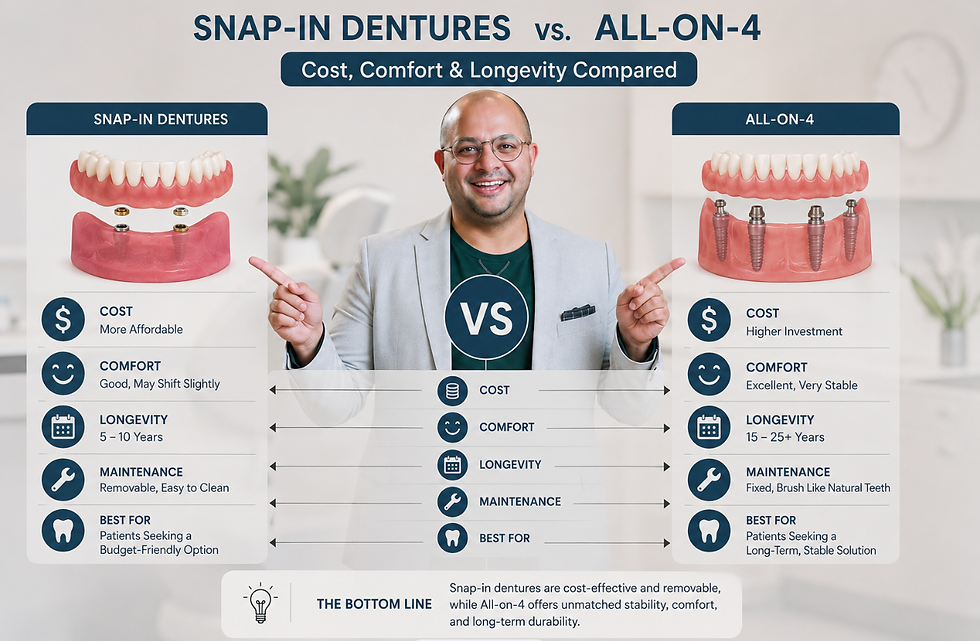
Choosing between Snap‑In dentures and All‑on‑4 dental implants can be difficult. Each option has distinct features, costs, and effects on comfort and long‑term satisfaction. This comparison explains differences in cost, comfort, and longevity for Houston patients and aims to help you select the option that best meets your needs.
Comparison of Snap-In Dentures and All-on-4 Dental Implants in Houston
When evaluating tooth replacement, compare the pros and cons of Snap‑In dentures and All‑on‑4 implants. Both replace missing teeth but use different mechanics and materials, and those differences affect clinical performance and the patient experience.
Cost:
Understanding the costs of Snap‑In dentures and All‑on‑4 implants helps patients plan responsibly. Snap‑In dentures are generally more affordable upfront, while All‑on‑4 requires a larger initial investment because it involves surgery and implant placement. Local prices in Houston vary with each patient's specific needs.
Average Cost Range for Snap-In Dentures: Generally around $3,000 to $6,000, providing a lower entry point for many patients.
Average Cost for All-on-4 Implants: This procedure may average between $20,000 to $35,000, typically including the surgical placement of the implants.
Additional Costs Over Time: Patients should also consider potential additional costs for maintenance and repairs, which can vary between the two options.
Oral Family Dental offers guidance on financing and payment plans to help patients manage costs while receiving quality care.
Comfort:
Comfort is a central consideration. Snap‑In dentures are removable and can be easier to clean, but they may move during eating or speaking. All‑on‑4 implants are fixed to the jawbone and typically provide greater stability and a more natural feel.
Patient Experiences: Many users of All-on-4 implants report feeling more confident in their dental function since these implants do not shift during use.
Stability During Use: Snap-In Dentures may occasionally shift, leading to discomfort during eating or speaking, compared to the fixed nature of All-on-4 implants.
Comparative Comfort Analysis: All-on-4 implants generally provide better comfort for daily activities, promoting a more natural feel due to their secure placement.
Longevity:
Longevity is an important factor. Snap‑In dentures can last several years with proper care, while All‑on‑4 implants are intended to last longer—often 10 to 20 years or more with routine maintenance.
Average Lifespan of Snap-In Dentures: Typically last between 5 to 10 years, depending on the level of care and maintenance they receive.
Expected Lifespan of All-on-4 Implants: Can last 10-15 years, making them a more durable option in the long run, provided they are well cared for.
Factors Affecting Durability: The longevity of both options can be influenced by oral hygiene, diet, and regular dental check-ups.
Knowing expected lifespans helps patients assess long‑term value and plan appropriate care.
What Are Snap-In Dentures and How Do They Work?
Snap‑In dentures are removable prostheses that attach to dental implants using clips or attachments, which provides greater stability than traditional dentures that rest only on the gums.
Snap-In Dentures Overview
They offer a more secure fit to improve confidence when eating and speaking; the implants act as anchors so the denture snaps into place.
What are the design features and maintenance needs of snap-in dentures?
These dentures are fitted precisely to seat over implants. Maintenance includes gentle cleaning with appropriate solutions and regular dental visits to check fit and oral health.
How do snap-in dentures improve denture stability and patient comfort?
The snap mechanism reduces movement during daily activities, which many patients report improves comfort and makes adjustment easier.
What Is the All-on-4 Implant Procedure and Its Key Benefits?
The All‑on‑4 procedure places four strategically positioned implants to support a full arch of prosthetic teeth. This approach reduces the number of implants required while enhancing strength and stability for the replacement arch.
How does the All-on-4 full arch replacement differ from traditional dentures?
Unlike traditional dentures that may shift, All‑on‑4 provides a fixed replacement that feels more secure and natural. Patients frequently report improved function and appearance with this method.
For more detailed information on the superior longevity and success of the All-on-4 concept compared to conventional dentures, consider the following research.
All-on-4 Concept: Longevity and Success Compared to Conventional Dentures
The All‑on‑4® concept is a treatment for completely edentulous patients that has shown successful outcomes compared with conventional dentures in both short‑ and long‑term studies and retrospective analyses. Prosthodontic perspective to all-on-4® concept for dental implants, 2014
What are the typical procedure duration and recovery expectations for All-on-4?
The All‑on‑4 procedure often takes a single surgical appointment lasting about 1.5 to 3 hours. Recovery varies, but many patients can resume normal activities within a few days.
How Do the Costs of Snap-In Dentures and All-on-4 Implants Compare in Houston?
A direct comparison of costs highlights financial differences and helps patients make an informed decision.
What are the average price ranges and financing options for each treatment?
Patients can explore financing options for both treatments. Oral Family Dental can discuss payment plans that fit individual budgets and circumstances.
How does long-term cost-effectiveness differ between snap-in dentures and All-on-4?
Although Snap‑In dentures typically have a lower upfront cost, their shorter lifespan can result in higher cumulative expenses over time due to repairs and replacements.
Which Option Provides Better Patient Comfort and Adaptation?
Both treatments involve distinct comfort profiles and adjustment periods. All‑on‑4 implant restorations generally receive higher comfort ratings because they are fixed and mimic natural teeth.
How do patients rate comfort levels with snap-in dentures versus All-on-4 implants?
Studies and patient surveys commonly report greater comfort with All‑on‑4 implants, noting less irritation and more natural function compared with Snap‑In dentures.
What adaptation challenges should patients expect with each option?
Both options require an adaptation period, but All‑on‑4 often presents fewer challenges since the prosthesis is secured and behaves more like natural teeth.
What Are the Longevity and Care Considerations for Each Dental Solution?
Both solutions require appropriate care and regular monitoring to maintain function and appearance.
How long do snap-in dentures typically last and what maintenance is required?
With proper care, Snap‑In dentures typically last about 5 to 10 years. Maintenance includes daily cleaning, routine dental check‑ups, and correct storage when not in use.
What is the expected durability of All-on-4 implants and recommended care?
All‑on‑4 implants often last 15 years or more when supported by good oral hygiene and regular dental visits; these practices are essential to their long‑term success.
What Success Stories and Patient Experiences Has Oral Family Dental Recorded in Houston?
Oral Family Dental has recorded many patient success stories for both Snap‑In dentures and All‑on‑4 treatments, documenting improvements in daily function and quality of life.
How have Houston patients benefited from snap-in dentures and overdentures?
Patients commonly report increased confidence and satisfaction with their smiles due to the improved stability and function that Snap‑In dentures can provide.
What are recent outcomes from All-on-4 implant treatments at Oral Family Dental?
Recent testimonials from All‑on‑4 implant patients show strong satisfaction and positive outcomes, supporting these implants as a long‑term investment in oral health.
Frequently Asked Questions
1. What are the main differences in aftercare between Snap-In Dentures and All-on-4 Implants?
Aftercare is essential. Snap‑In dentures require daily cleaning to remove food and plaque, and regular check‑ups to assess fit and gum health. All‑on‑4 implants need routine brushing and flossing plus professional cleanings and exams, typically twice a year; implants may also require specific monitoring because they integrate with the jawbone.
2. Can Snap-In Dentures be converted to All-on-4 implants in the future?
Yes. Many patients can transition from Snap‑In dentures to All‑on‑4 implants. Existing implants may sometimes be reused, but suitability depends on bone quality and overall oral health. A dental evaluation will determine feasibility for each case.
3. Are there specific health conditions that affect eligibility for All-on-4 implants?
Certain health conditions influence eligibility. Uncontrolled diabetes, autoimmune disorders, or severe gum disease can increase the risk of complications or impaired healing. A thorough evaluation, including medical history and imaging, is necessary before proceeding.
4. How does the healing process compare between Snap-In Dentures and All-on-4 implants?
Healing for Snap‑In dentures is generally quicker, with minor adjustments within days and earlier use. All‑on‑4 implants require a longer healing period for osseointegration—the bone fusing to the implants—which takes several months and is critical for final stability.
5. What financing options are commonly available for both Snap-In Dentures and All-on-4 implants?
Many dental practices, including Oral Family Dental, offer flexible financing for both treatments. Ask about payment plans, third‑party financing, and insurance coverage to manage out‑of‑pocket expenses effectively.
6. What dietary restrictions should be considered with each solution?
Dietary guidance differs. Snap‑In dentures can cause discomfort with hard or sticky foods due to potential movement. Patients with All‑on‑4 implants typically tolerate a broader range of foods because implants function like natural teeth. Both groups should avoid extremely hard items to prevent damage.
7. Can I switch from traditional dentures to Snap-In Dentures?
Yes. Many patients upgrade from traditional dentures to Snap‑In dentures for improved stability and comfort. The process usually involves placing implants in the jawbone and then fitting the Snap‑In prosthesis; a dental exam will confirm suitability.
Conclusion
Choosing between Snap‑In dentures and All‑on‑4 implants affects oral health and quality of life. Snap‑In dentures are generally more affordable and easier to manage, while All‑on‑4 implants deliver greater stability and longevity for a more natural result. Understanding these options will help you make an informed choice. Contact Oral Family Dental to schedule a consultation and discuss the best option for your smile.


Comments